Las Cuatro Estaciones Porteñas The music, its history, and its concert-hall versions
Astor Piazzolla's Four Seasons of Buenos Aires (Las Cuatro Estaciones Porteñas) is one of the defining works of Nuevo Tango. It began as four separate pieces for Piazzolla's quintet, with bandoneon (bandoneón) at its center, and it now lives in the concert hall in versions for violin and strings, bandoneon and string orchestra, and bandoneon and full orchestra.
This page traces the work's history and shows how it can be programmed for bandoneon and orchestra with Julien Labro.
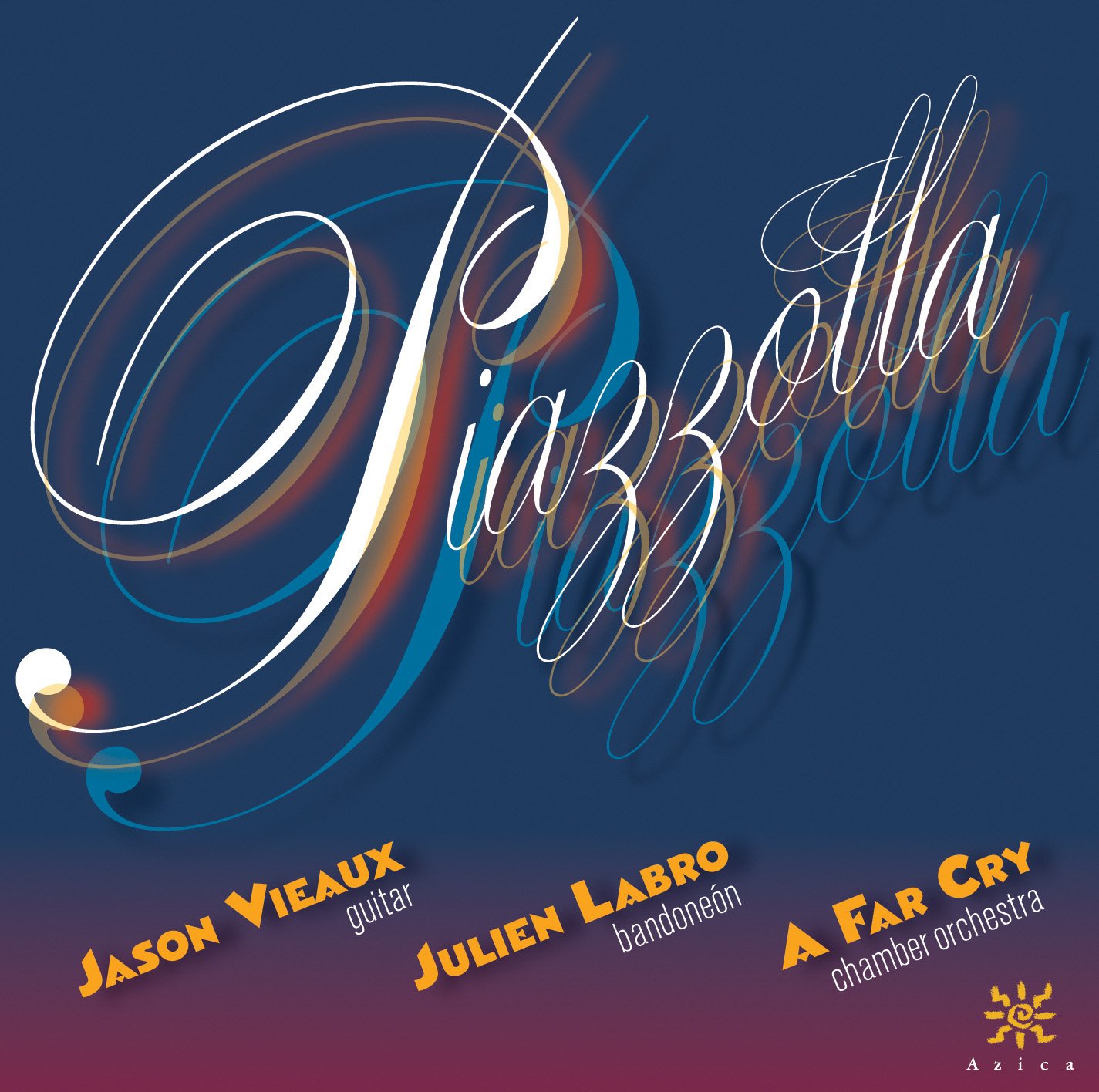
Recording:The Music of Astor Piazzolla Julien Labro, bandoneon · Jason Vieaux, guitar · A Far Cry Azica Records, 2011 Listen to the recording
The work
Piazzolla wrote the four pieces between 1965 and 1970. Each grew out of the Nuevo Tango he developed with his quintet: bandoneon, violin, piano, electric guitar, and double bass. That group became his principal performing vehicle, and the music of the Four Seasons carries its sound: tight rhythmic attack, tango dance patterns pushed into new harmonic territory, and long, aching melodies.
The four seasons
Piazzolla didn't conceive these as a single four-movement piece. In Buenos Aires, the seasons are reversed from the Northern Hemisphere, so Verano (summer) falls in December through February.
Verano Porteño
1965
Verano Porteño began in 1965 as music for Alberto Rodríguez Muñoz's play Melenita de oro, years before Piazzolla's four Estaciones Porteñas came to be understood as a cycle. That same year, Piazzolla also created a version for Aníbal Troilo's orchestra, and the work continued to evolve through several versions and transformations. The earliest theater version lasts less than four minutes. As the piece evolved, so did the larger idea of Piazzolla's Buenos Aires seasons, which were performed and recorded together for the first time in 1970 at the Teatro Regina in Buenos Aires. For that reason, Verano Porteño is the natural starting point of the cycle: the first of the four, and the work from which the others grew.
Its muscular, driving tango pulse is set against passages of sultry lyricism, reminiscent of the bochorno, that oppressive, almost suffocating atmosphere familiar to Buenos Aires in the height of summer.
Otoño Porteño
1969
Otoño Porteño was written in 1969, four years after Verano Porteño, as Piazzolla continued to develop his portrait of Buenos Aires through the seasons. Between March and June of that year, the Astor Piazzolla Quintet gathered at ION Studio in Buenos Aires for a series of recording sessions that produced Adiós Nonino, one of the defining albums of Piazzolla's quintet period. Among its tracks is the first recording of Otoño Porteño, offering a fascinating glimpse into the musicians who shaped this period of Piazzolla's music, notably violinist Antonio Agri, whose playing became such an important part of the quintet's sound.
The piece moves between sharply articulated tango rhythms and more expansive chords and clusters, with the violin and bandoneon exchanging a melody that is at once lyrical and melancholy.
Invierno Porteño
1969
Invierno Porteño was written in 1969. With Primavera added in 1970, the four pieces were first performed together at the Teatro Regina in Buenos Aires. The concert, recorded live and released as Piazzolla en el Regina, marked the first time the four Estaciones Porteñas were heard together.
Of the four seasons, Invierno Porteño is perhaps the most immediately haunting. Its long, expressive melody unfolds over Piazzolla's rhythmic language before the music turns toward an unexpected Baroque gesture near the end: a descending sequence that recalls the harmonic language of composers such as Pachelbel. The effect is striking: Buenos Aires tango and an older European musical tradition briefly meeting within the same piece.
The music also took on a new life through words. In 1979, Argentine poet and songwriter Eladia Blázquez wrote lyrics for Invierno Porteño, transforming Piazzolla's instrumental portrait of winter into a song.
Primavera Porteña
1970
Primavera Porteña was written in 1970 and completes Piazzolla's Cuatro Estaciones Porteñas. Listen closely to the bandoneon opening and you can hear a distinctly contrapuntal idea at work: one instrument enters, then another follows, taking up the musical idea in imitation, creating a cascading sequence of entrances, a fugato, or fugue-like passage.
The connection to Piazzolla's classical training is not accidental. During his studies with Nadia Boulanger in Paris, he worked extensively on counterpoint and fugue, and Boulanger encouraged him to bring that knowledge into his own musical language rather than leave it behind. Her influence can be heard throughout Piazzolla's music, where rigorous contrapuntal writing exists alongside the rhythmic language of tango. Boulanger, one of the most influential music pedagogues of the 20th century, also taught composers including Aaron Copland and Elliott Carter.
Piazzolla went on to perform the four pieces together, and the cycle became known as Las Cuatro Estaciones Porteñas.
From Piazzolla's quintet to the concert hall
In its original form, the Four Seasons is quintet music, and the bandoneon was one of its five voices. As the work moved into the classical repertoire, it was arranged for many combinations.
One of the most widely known concert-hall versions is Leonid Desyatnikov's arrangement for solo violin and strings, created between 1996 and 1998 for violinist Gidon Kremer and Kremerata Baltica. Desyatnikov conceived it in dialogue with Vivaldi's Four Seasons, weaving quotations from Vivaldi into Piazzolla's music. Kremer later paired the two works on the recording Eight Seasons, released in 2000. That version helped establish the work firmly in the orchestral repertoire and is now the arrangement most programmers know.
It's not the only way to hear the piece. Because Piazzolla's original scoring centered on the bandoneon, several later versions return that instrument to the front of the stage.
The Four Seasons in the concert hall
All three configurations below are available in Julien Labro's arrangements.
Bandoneon & string orchestra
A bandoneon-led concert-hall configuration and a natural fit for chamber and string orchestras. The bandoneon takes the solo role, bringing forward the instrument at the heart of Piazzolla's quintet.
Bandoneon & full orchestra
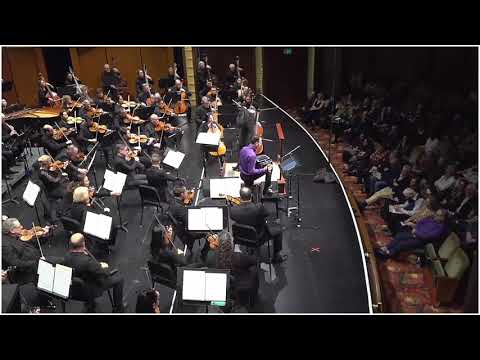
The Four Seasons at full symphonic scale, with the bandoneon out front. Recent American performances include the Hartford Symphony Orchestra and the Harrisburg Symphony Orchestra.
Guitar, bandoneon & strings
Julien's arrangement for guitar, bandoneon, and strings, which extends the chamber character of Piazzolla's original quintet. It has been performed with Jason Vieaux and A Far Cry, and with Orchestra of St. Luke's, and recorded with Vieaux and A Far Cry.
Why bandoneon?
The bandoneón was one of the five instruments in Piazzolla's original quintet and one of the instruments most closely associated with his musical voice. Its bellows-driven articulation, rhythmic bite, and expressive range are central to the sound of Nuevo Tango.
Different arrangements bring different colors to the work. A bandoneón-led version places one of Piazzolla's defining instruments back in the foreground, bringing the sound world of his original quintet into the concert hall.
A note from Julien
I've been playing Piazzolla's music since I was a teenager, and the Four Seasons of Buenos Aires has always felt particularly close to the instrument at the heart of Piazzolla's quintet.
On bandoneon, the bellows make the phrasing physical: you can shape a note from breath-like softness to a sharp, percussive attack, often within the same phrase. There is also something about hearing the bandoneon against strings that changes the color of the music. It brings the sound of Piazzolla's quintet back into the concert hall.
When I play these pieces, I hope the audience hears both sides: the tango underneath, and the remarkable composer Piazzolla became.
Julien Labro
Julien Labro and the Four Seasons
Julien Labro brings Piazzolla's Four Seasons of Buenos Aires to the concert hall with the bandoneon at the center, in versions for strings, full orchestra, and guitar with strings.
Materials vary by arrangement. Julien's team can confirm the appropriate score, parts, and instrumentation for each ensemble.
Frequently asked questions
How long is Piazzolla's Four Seasons of Buenos Aires?
Roughly 30 minutes for the complete cycle, depending on the arrangement and tempi.
When did Piazzolla write the Four Seasons?
Between 1965 and 1970: Verano Porteño in 1965, Otoño and Invierno in 1969, and Primavera in 1970.
Was it written for violin or bandoneon?
Neither as a solo vehicle. Piazzolla wrote it for his quintet of bandoneon, violin, piano, electric guitar, and double bass. Solo-violin and solo-bandoneon versions were arranged later.
Who arranged the string version?
One of the best-known string versions, for solo violin and strings, is by Russian composer Leonid Desyatnikov (1996 to 1998).
Is there a version for bandoneon and orchestra?
Yes. Julien Labro performs the work with bandoneon and string orchestra, and with bandoneon and full orchestra.
Did Piazzolla intend it as a response to Vivaldi?
Not in the original pieces. The Vivaldi quotations come from Desyatnikov's later arrangement, not from Piazzolla's originals.